10 Foods You Must Try When Visiting Beijing(5)

5. Traditional Snack Series

1) Rolling donkey(Lvdagun)
✨Introduction

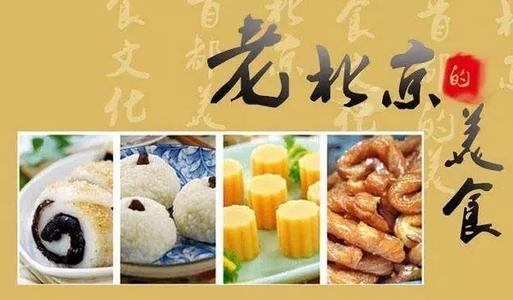
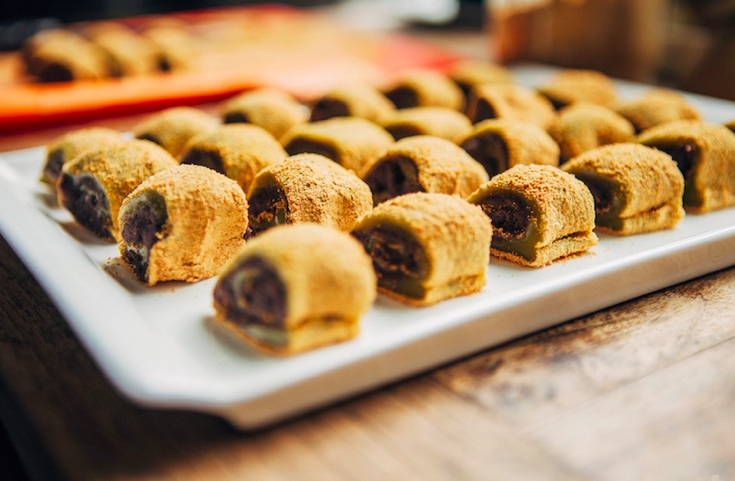
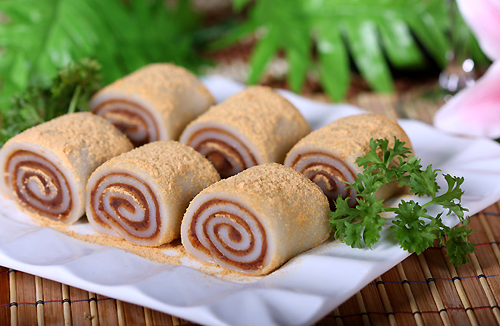
Donkey rolling is one of the traditional snacks in northeast China, old Beijing and tianjin. Due to its final production process on the sprinkle of soybean flour, like the old Beijing outskirts of the wild donkey when raising the loess, hence the name “donkey rolling.” Rolling donkey is made from millet flour or sticky rice stuffed with red bean paste. And then the formed Lvdagun is trundled in sesames. Lvdagun is characterized by fragrant, glutinous and sweet.

“Donkey rolling” raw materials are rhubarb rice noodles, soybean noodles, cheng sha, white sugar, sesame oil, osmanthus, green and red silk and melon kernel. Its production is divided into billet, and filling, forming three processes.
✨History

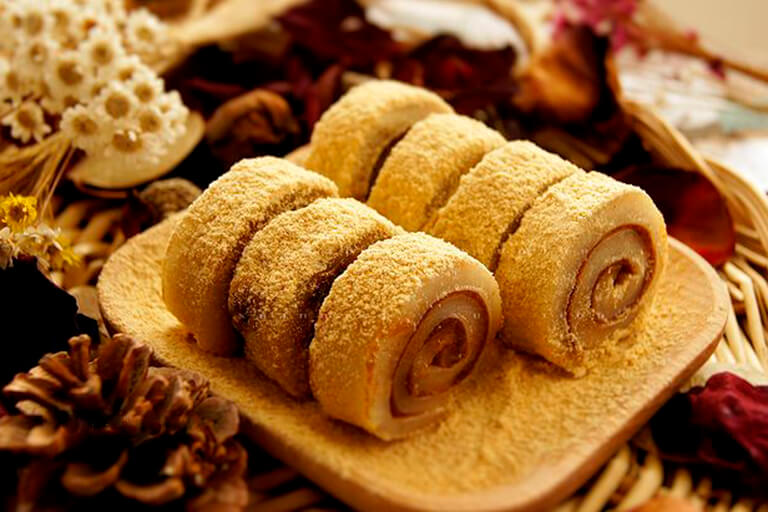
It is said that the empress dowager cixi once got tired of the palace food and wanted something new. So the imperial chef thought and decided to make a new dish with rice flour wrapped in red bean paste. New dish just a well. There is a eunuch named donkey went to the imperial cuisine kitchen, who knows this donkey a carelessly, and put just finished new food met with soy basin below. But at the moment, there is no time to make again, so the chef had to take the dish in front of the empress dowager. Afrer the empress dowager ate the new gadget and found it delicious, she asked the chef, “what is it called?”. The chef thought for a while, but it was all caused by the eunuch who called the donkey son, so he said to the empress dowager, “this is called donkey rolling.” Since then, there is “donkey rolling” this snack.
✨Serving

The raw material of lvdagun is steamed with yellow rice noodles and water, and mixed with a little more water and soft. Stir-fry the beans and roll them into flour. When the production of steamed yellow rice noodles outside dipped in soybean flour rolled into a piece, and then wipe the red bean paste stuffing (also available brown sugar) rolled up, cut into about 100 grams of small pieces, sprinkled with white sugar.

It is required to roll the filling evenly, with distinct layers and yellow appearance. It is characterized by aroma, sweetness, stickiness and strong flavor of soybean flour. Soybean flour cake with soybean flour as its main raw material, so called soybean flour cake.

2) Wan Dou Huang
✨Introduction

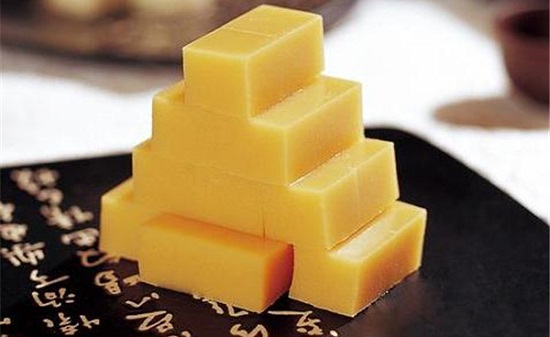
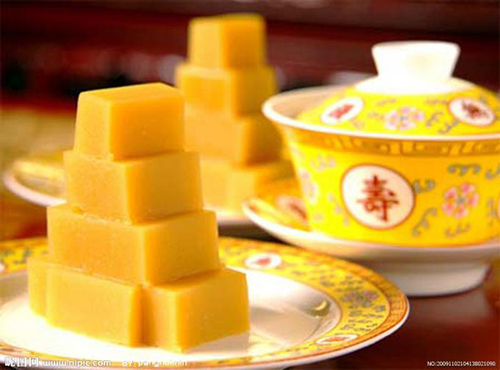
Wan Dou Huang (Pea Flour Cake) is a favorite springtime food. It is a savory cake that is prepared by mixing green peas puree into a cake batter to create a green tinted cake. It has both nice look and nice taste.

✨History

It is said that one day cixi is sitting in beihai quiet heart zhai to have a rest. Suddenly she heard on the street from beating the gong sound and shouting, so she told the eunuch to seek what it was. Then he reported that this is selling peas yellow, kidney bean roll. She was pleased and ordered the man to come into the garden. When the visitor saw him, he knelt down quickly, holding kidney bean roll and pea yellow in both hands and letting cixi to taste. The empress dowager cixi was so impressed that she left the man in the palace to make pea yellow and kidney bean rolls for her.
✨Serving

  1. Soften the peas. Add water and alkali noodles to the stainless steel dish. Cook the beans until soft, then use the steamer.
  2. Stir-fry beans must be strict control of the heat. If the fry is too tender and too much water, it is not easy to cut when solidified. Fried too old will appear after solidification cracks, affecting the appearance. In the stir-frying process, it must use the board to pick up the test, such as the bean paste to drip slowly, and pile up into a pile.
  3. Pour into the dish, cool, cut into small pieces.
✨My favourite restaurant

Hong Ji Niu Jie
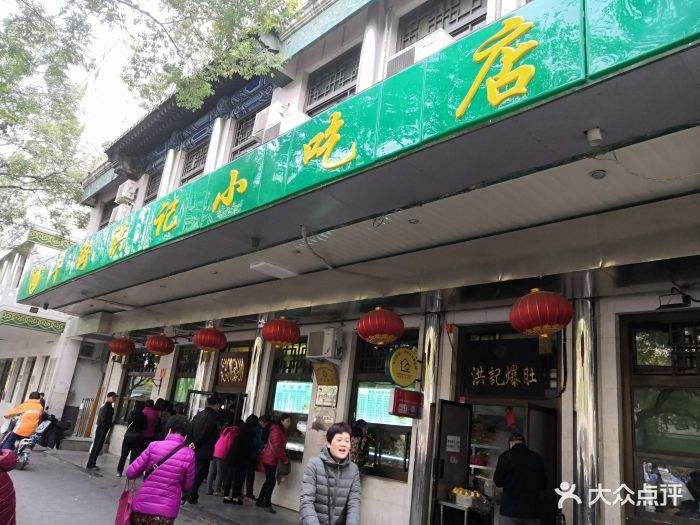
Hong ji Niu jie, is Beijing’s famous hui min street snack bar. You have to queue up whenever you come here, and most of them buy Beijing traditional snacks. The most famous and distinctive feature is the traditional halal snacks in old Beijing, with various varieties and pure taste, which is also the childhood memory of many residents nearby. Therefore, its snacks have become the spiritual sustenance and spiritual totem of some local people in a sense.

🏠Location
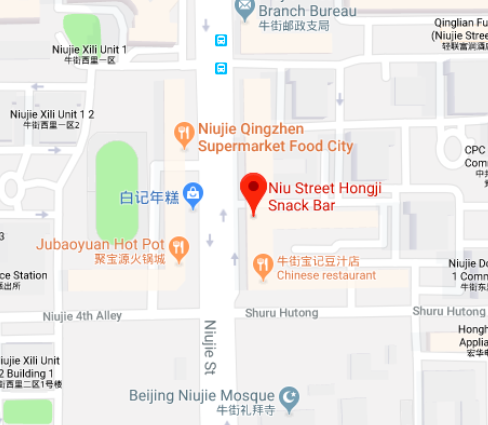
Address: Niu Street Hongji Snack Bar Xicheng, Beijing, China

Business hour: Everyday 5:30AM-10:30PM
10 Foods You Must Try When Visiting Beijing(4)

4. ZhajiangMian

✨Introduction

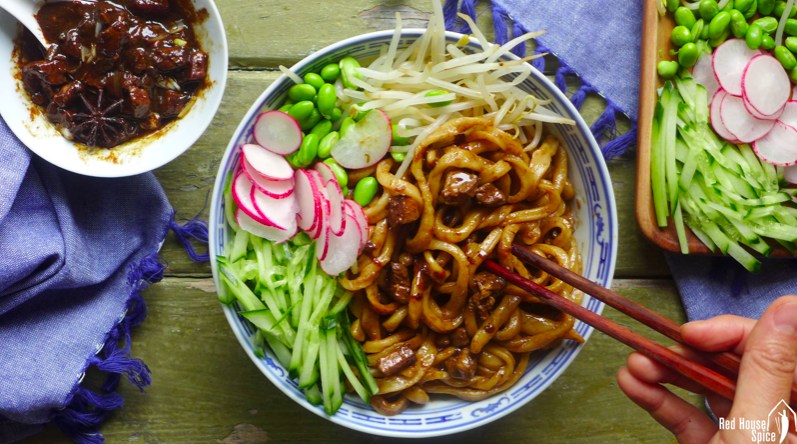
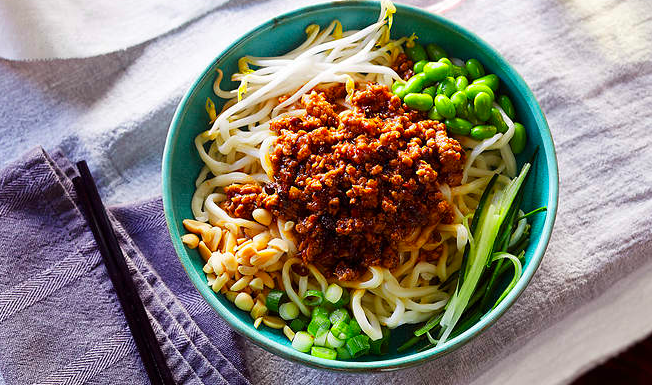
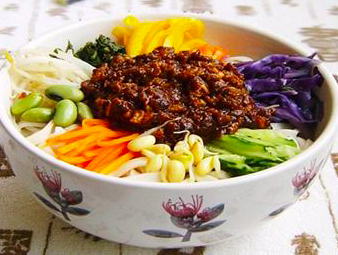
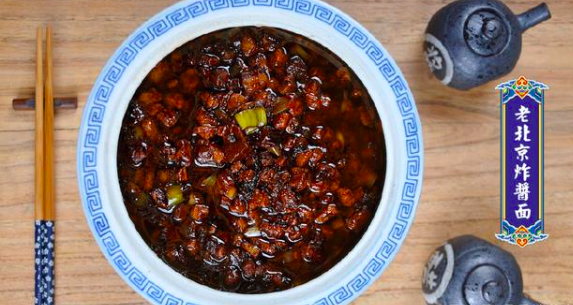
Zhajiangmian (Chinese: 炸醬面; literally: ‘fried sauce noodles’), or “noodles with soybean paste”, is a Chinese dish consisting of thick wheat noodles topped with zhajiang sauce. Zhajiang sauce is normally made by simmering stir-fried ground pork or beef with salty fermented soybean paste. Zhajiang also means “fried sauce” in Chinese. Although the sauce itself is made by stir-frying, this homonym does not carry over into the Classical Chinese term.

Speaking of old Beijing fry sauce noodles, that is the pride of the old beijingers, famous for its fast and good, delicious, reportedly noodle should have evolved from “cold rotten meat noodles”.

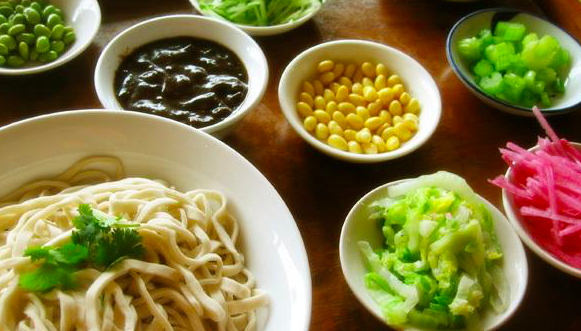
The topping of the noodles usually are sliced fresh or/and pickled vegetables, including cucumber, radish, edamame, depending on regions. Chopped omelette or in lieu of extra firm tofu can also be alongside. Low-fat dieters often use ground, skinless chicken for the meat portion since ground turkey is not very popular in Asia.

✨History

Zhajiangmian originate from Shandong province and is an iconic Northern Chinese dish. It is unknown how the dish came to be and only a few folktales are available. During the Guangxu era of the Qing dynasty, after the Eight-Nation Alliance invaded China and conquered Beijing, The Empress Dowager Cixi, Emperor Guangxu and their retinues were forced to move from Beijing to south street in Xi’an city. While they were on their journey to Xi’an city, the Imperial Eunuch, Li Lianying detected a pleasing aroma, so he looked and found the smell came from a Zhajiangmian noodle restaurant. He then reported the information about the restaurant to Cixi and Guangxu. Due to the collective fatigue and sense of hunger after their long trip, Cixi and Guangxu decided to have a meal in the restaurant. Li Lianying ordered a bowl of vegetarian zhajiangmian. Finding it a tasty dish, they ordered another one. After dinner, Cixi asked everyone how they found the taste of the dish? They all replied “This is definitely a good noodle, good! Good!” Shortly after, as Emperor Guangxu was about to leave and continue their trip, Cixi demanded that Li Lianying bring the chef who made the zhajiangmian to Beijing and the palace, so they could eat zhajiangmian often once they came back. This is the story of how the vegetarian zhajiangmian made its way to Beijing.

✨Serving

The basic ingredients of old Beijing Fried bean paste noodles are pork belly, dried yellow sauce, sweet noodle sauce, mushroom and green onion (you can also add Onions and dried beans); Aniseed anise, cinnamon, sichuan peppercorns, fragrant leaves; Vegetable code has cucumber, mung bean sprouts, carrots, shredded tofu, purple cabbage, mung bean, sweet corn and so on; There are thirteen spices, dark soy sauce, garlic slices, ginger slices.

Particular way is:

To rapeseed oil heat, sixty percent hot wait in aniseed and ginger, onion slices. Fried to remove when the focal yellow, then put the pork belly at the end of the foam and mushrooms into the pot and stir-fry until pale and toss, then after mixing dry mayonnaise (2:1) and the sweet bean sauce into the pan Fried, after the fragrance into the meat, add a small amount of 13 xiang and soy sauce and 13 sweet flavor, the extraction of color, add in half bowl of water after mixing, glug after twenty minutes, turn off the heat into the scallion foam, blend to remove it.

In the production of the need to pay attention to a few aspects: pork belly fat more thin less, so that the sauce taste better; Dry yellow sauce in the pot before adding water to boil, dry sauce and sweet sauce ratio must be 2:1,; Without adding salt and sugar, the flavor of sweet flour paste and dried yellow sauce is enough. Cook the noodles a little harder, remove them and run them through the water to make them loose and chewy. Vegetables must be blanched in cold water to make them crisp and refreshing.

✨My favourite restaurant

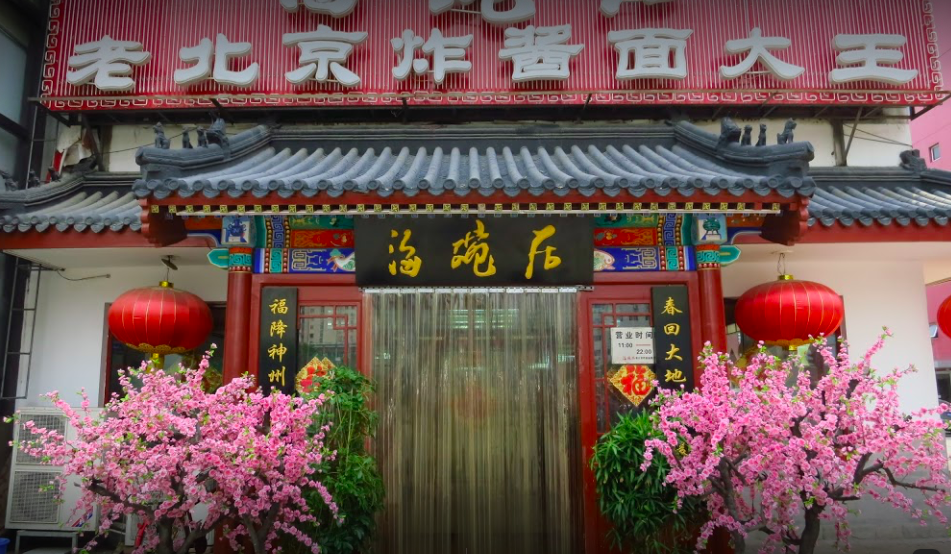
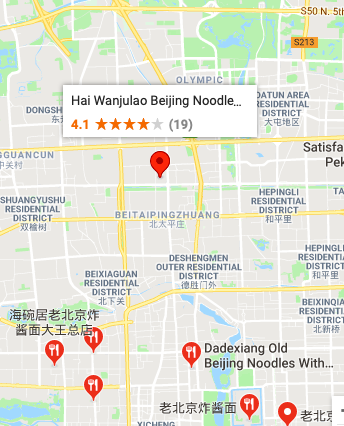
Hai Wanjulao Beijing Noodles With Soybean Paste King

“Hai wan” refers to the big bowl used when eating noodles with Fried sauce. People in Beijing are generous and free and easy. They like to eat noodles with big bowls.

It is said that, the noodles are the representative of the civilian cuisine in Beijing, the noodles are very muscular and smooth, and add diced meat, cucumber silk, heart beautiful silk, bean sprouts, garlic, cabbage, celery, green beans and other eight kinds of small dishes, according to personal taste preferences mixed into the shop’s special soy sauce, taste levels are rich.

🏠Location

Address: 2 Huayuan Rd, Haidian Qu, Beijing Shi, China

Business Hour: 11AM-10PM everyday

10 Foods You Must Try When Visiting Beijing(3)

👪Objective:

With China’s growing economy and rising living standards, more and more foreigners choose to travel to China. Also, Chinese cuisine is indeed extensive and profound. Eight major cuisines, each with unique skills. Let countless foreign tourists after eating are full of praise! The power of word of mouth leads to a steady stream of foreign food lovers, who have set foot on the flight to China, ready to start their own food tour!

As the capital of China, Beijing is the first choice for tourists, so I hope to use such a blog to introduce Beijing’s traditional food, so as to attract more foreigners to Beijing to taste and understand its history and serving methods. In this way, I want to enhance foreigners’ interest in China and promote Chinese traditional culture.

On the other hand, when foreigners arriving at Beijing, they can easily find what are they must try, also with the location and business open hour about the restaurant, helping them to find the way to these delicious foods and know the schedule of them. I will show them what are the really worth eating foods and what are the most authentic restaurants, and recommand one of the most favourite restaurants by local residences rather than the travellers, helping foreigners to experience the most traditional cuisine. The only thing they should do is to follow my way to start their food journey!

3. Instant Boiled Mutton

✨Introduction

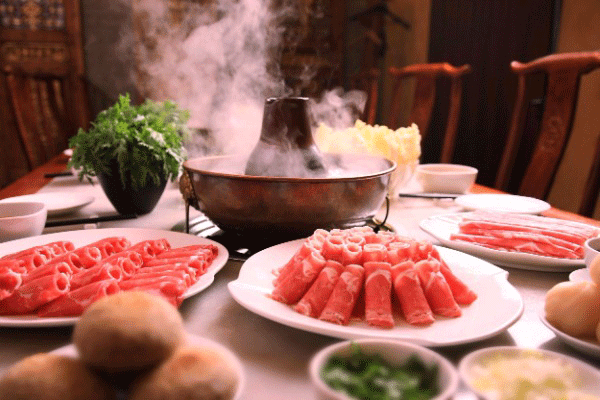
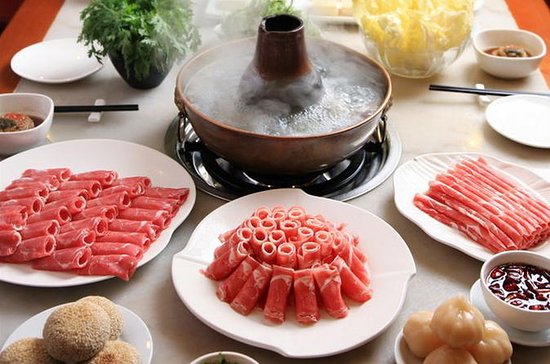
Instant Boiled Mutton is a famous Beijing dish which dates back to the Yuan Dynasty. Sliced mutton will be put in a hotpot and boiled in soup. It is usually served with sesame sauce, preserved bean curd, leek flower and sliced spring onion.

✨History

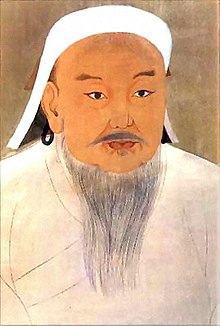
Genghis Khan (1162–1227) became the Great Khan in 1206 after unifying various nomadic Mongol and Turkic tribes. His ascent marked an onslaught of invasions that expanded the newly created Mongol empire as far as the Black Sea in Central Europe. This founder of the Yuan Dynasty (1271-1368) is regarded in world history as both an outstanding politician and military strategist.

Legend has it that during one particularly arduous military campaign the Khan’s cooks needed to devise a rapid method of preparing food for him and the troops. They came up with the idea of slaughtering a sheep and simply boiling the flesh – a tasty dish that both nourished the troops and boosted their morale.

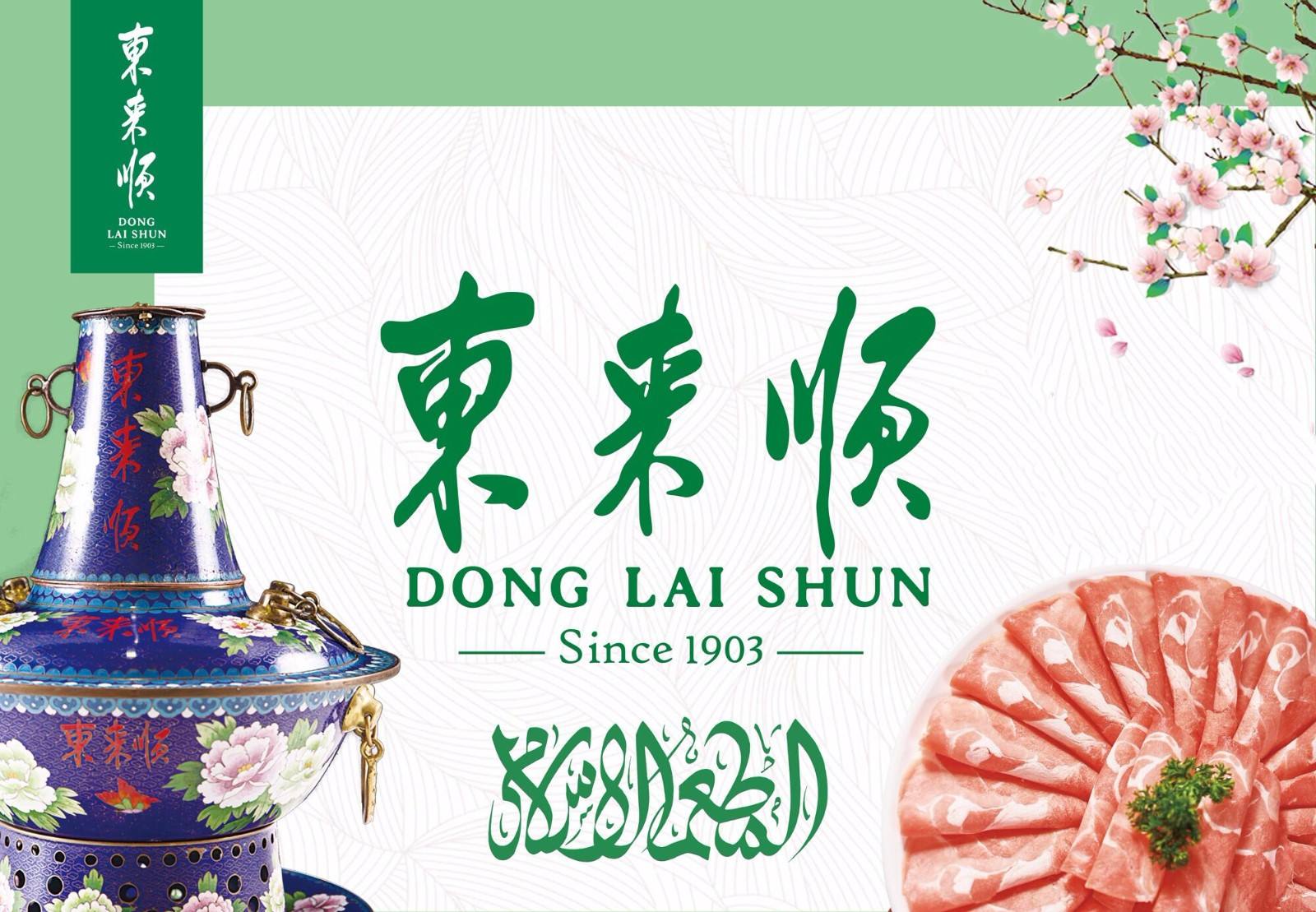
The dish originally consisted of small, thick slices of mutton. By the Qing Dynasty (1644-1911), dip-boiled mutton had become popular both in the imperial court and among the common people. The year 1854 saw establishment of the Zhengyanglou, the first Han-owned restaurant in central Beijing to specialize in instant-boiled mutton. The dish was served in paper-thin slices – an innovation that heightened its popularity. At the beginning of the Republic of China (1912-1949) period the Beijing Donglaishun Restaurant enticed the chef in charge of slicing mutton away from the Zhengyanglou by tripling his pay. It thereafter specialized in instant-boiled mutton. Donglaishun proprietors went to great pains to ensure excellence by selecting only the best mutton, slicing it as finely as possible and compiling seasonings that most enhanced its flavor. The Donglaishun thus gained an unassailable reputation.

✨Serving

When instant-boiled mutton is eaten in China, a hot-pot of boiling water is placed in the middle of the table. Tofu, Chinese cabbage, bean sprouts, and vermicelli are normally included in the hot-pot. Lamb is pre-sliced paper-thin into unbroken pieces and served on the table. Eaters pick up some pre-sliced raw lamb using chopsticks, put it in the boiling hot-pot, and remove it as soon as the lamb changes color. Each person has a small bowl to hold sauce for the cooked lamb; the sauce is normally a mixture of sesame sauce, chili oil, leeks, and more.

✨My favourite restauran

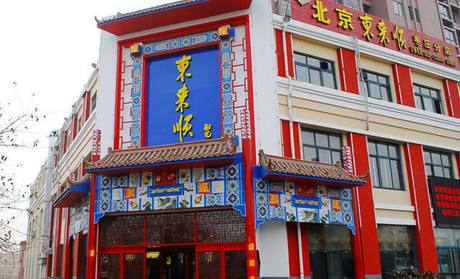
Donglaishun

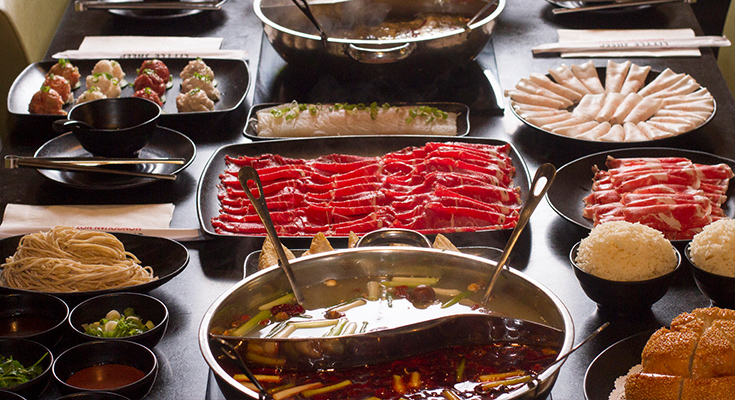
With a number of branches in Beijing, some of this laozihao (time-honored brand) chain’s newer locations reflect an effort to retool, in terms of style and revisions to the menu, to meet the demands of modern diners, but Dong Lai Shun’s essence remains its famous mutton hot pot.

This hot pot chain out of Beijing has a festive, high-energy appeal and from its mood to sheer quantity, it’s best enjoyed with a group. Select from the various soup bases, pick your proteins and vegetables and then sit around the steaming cauldrons as servers guide you on this steaming-hot ride. Lamb is the signature protein—there’s even a chef slicing away at a station in the back—but handmade beef meatballs are popular too. The sauces, including the sweet and creamy sesame or the hot chili oil, up the ante. Fret not about waste; the servers will gladly package it for later.

🏠Location

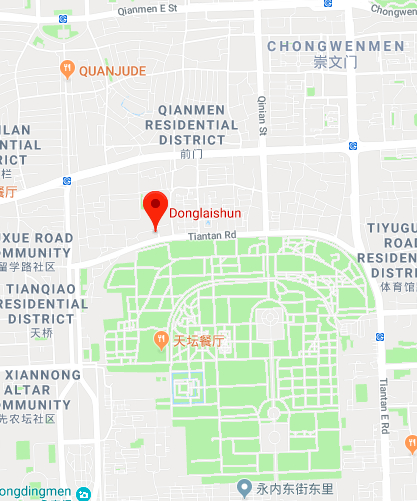
91 Tiantan Rd, Dongcheng Qu, Beijing Shi, 100050

010 6701 6992

Business hours: Monday to Sunday11AM–4PM;5–9:30PM

10 Foods You Must Try When Visiting Beijing(2)

2. Lu Zhu Huo Shao

✨Introduction

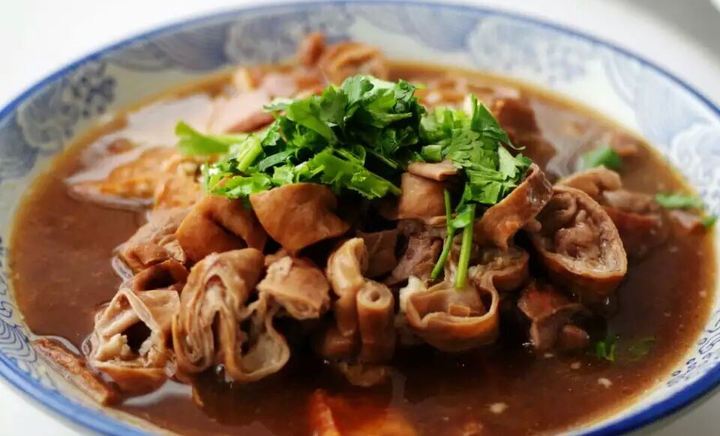
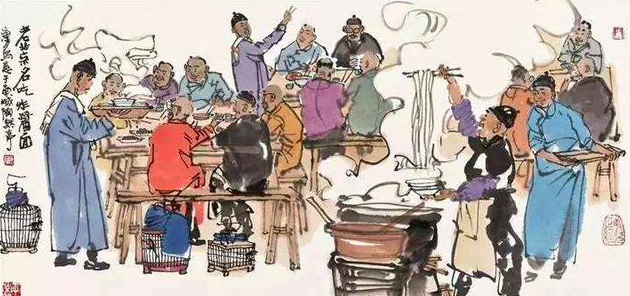
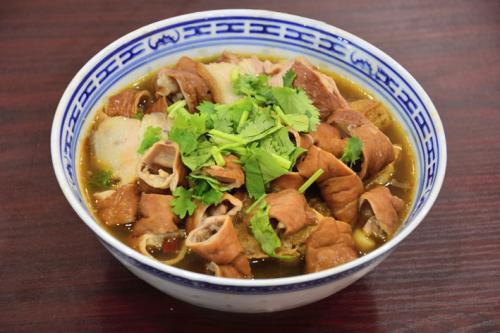
Lu Zhu Huo Shao (or wheaten cake boiled in meat broth) is a popular dish in Beijing. With a name that literally translates to “stewed bread,” unsuspecting diners may be surprised to find that bread floating in a steaming-hot soup alongside intestines, lungs, and tofu. That may be enough to keep many tourists at a safe distance, but for Beijingers, this traditional local delicacy is beloved as a hearty meal–perfect for those looking for a second wind after a long day at work, or to warm up on a cold winter’s day. 

Today, luzhu remains a signature Beijing dish almost impossible to find outside the city. So if you’re on the fence about this one, we say seize the chance to “enjoy” a truly local experience–and impress your Chinese friends in the process.

✨History

The origins of luzhu huoshao can be traced back to the Qing dynasty  as a palace food in Peking. According to legends, “su zao rou” was a dish invented by Zhang Dongguan as a tribute for Qianlong Emperor during one of Qianlong’ inspection to Suzhou around 1970 and it was the origin of luzhu huoshao. Unlike other cook Zhang Dongguan usually combines different types of herbs and spices in cooking, and his technique impressed Qianlong emperor, so Zhang eventually became the lead cook in the palace.

As time goes by, the recipe of “su zao rou” spread to the out side of palace as well, and many people tried to imitate the cooking style and eat like an emperor. However the key ingredient, which is pork belly, was not very affordable for many people at that time. Therefore, pork lung, intestines and many other type of pork offal were used as a substitute for pork belly, in order to make the most people able to afford this dish.

Hence, luzhu huoshao was formed over generations, and since then, it has become one of the most well-known Beijing street food, and still in fashion nowadays

✨Characteristic

There are certain characteristics that are expected from a well made luzhu huoshao, which also make it a unique Beijing street food. Similar to baodu, the meat in a well made luzhu huoshao is supposed to be reasonably chewy, neither too tough nor falling apart. It might have an unappetizing appearance, but the taste should be rather complex and salty, with a sense of herb and soy sauce. The huo shao is soaked in the soup to flavor it, and it should be juicy rather than sticky. Pork offal would have a strong odor due to its property, but it should still be fresh made, without any tacky taste or smell.

✨Serving

Customers can choose to liven up their luzhu with a range of condiments, usually available at the main counter, where you can spoon in as much as you’d like.

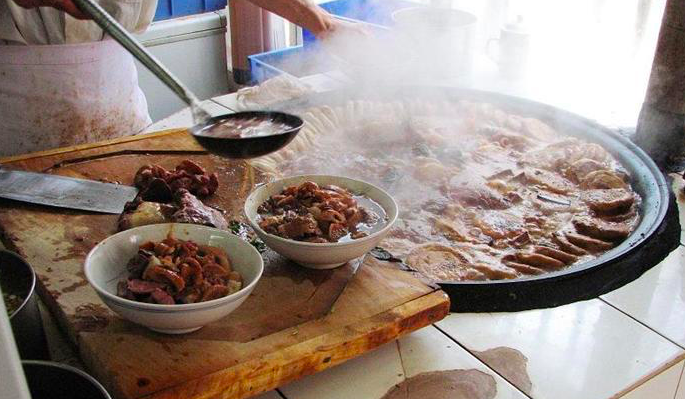
Several ingredients including baked wheaten bread, tofu, pork chop, chitterlings and pork lung are cut into pieces and boiled in meat broth. The dish is usually served with mashed garlic, chili oil, vinegar, fermented tofu, chives and coriander.

✨My favourite restaurant

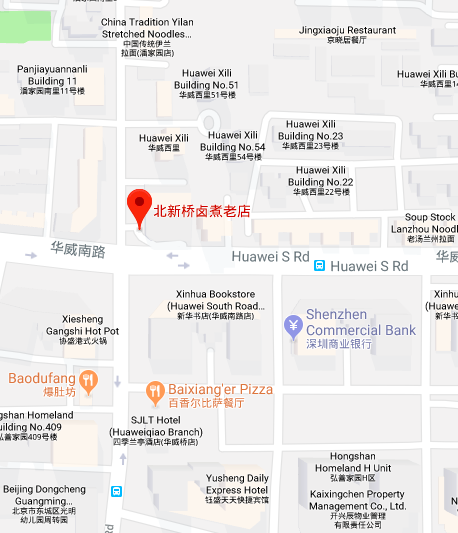
Beixinqiao

Large intestine is particularly fat, thin skin smooth bright, taste delicious; Fat layer thick and firm, fresh and soft waxy, completely no greasy feeling. Pig lungs are also very good, the smell is not heavy.

Baked wheaten bread, tofu, pork chop, chitterlings and pork lung are cut into pieces and then boiled in the preserved meat broth. It is served with mashed garlic, chili oil, vinegar, fermented tofu, chives and coriander. 

🏠location

141 dongsi north street (near rujia beixinqiao store) 

010-84015365

Business hours: 11:30-14:00 17:30-04:00 Monday to Sunday

10 Foods You Must Try When Visiting Beijing

First, let’s talk about my inspiration. I’m a girl who grow up in Beijing since I was 8 years old. In my spare time, I enjoy looking for Beijing traditional foods in different places called Hutong with my best friends. Therefore, I want to build a platform to promote Beijing culture and history in western country and also call for more foreigners to come to Beijing, China to taste a variety of special food. In my blog, I will share 10 Foods You Must Try When Visiting Beijing.

  1. Peking duck

✨Introduction

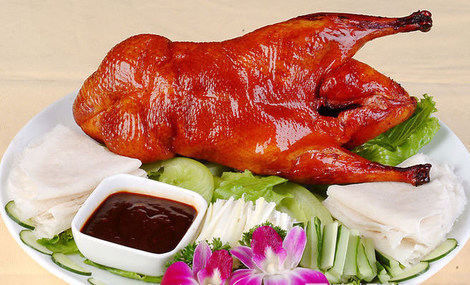
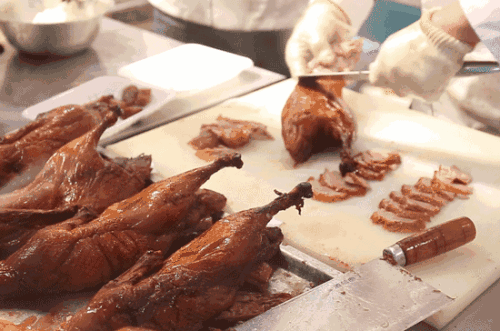
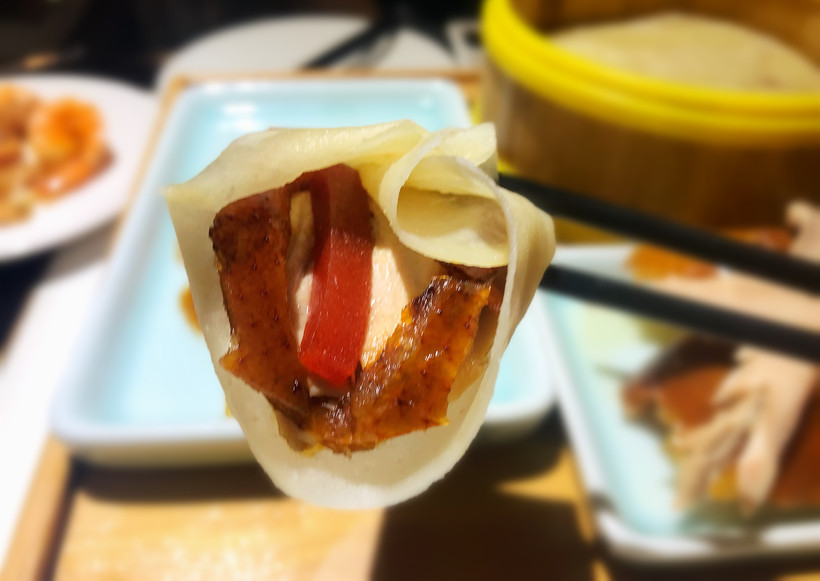
Peking Roast Duck is a must-try food in Beijing. Also, Peking duck is a dish from Beijing that has been prepared since the imperial era. The meat is characterized by its thin, crisp skin, with authentic versions of the dish serving mostly the skin and little meat, sliced in front of the diners by the cook. Ducks bred specially for the dish are slaughtered after 65 days and seasoned before being roasted in a closed or hung oven. The meat is often eaten with spring onion, cucumber and sweet bean sauce with pancakes rolled around the fillings. Sometimes pickled radish is also inside, and other sauces (like hoisin sauce) can be used.

✨History

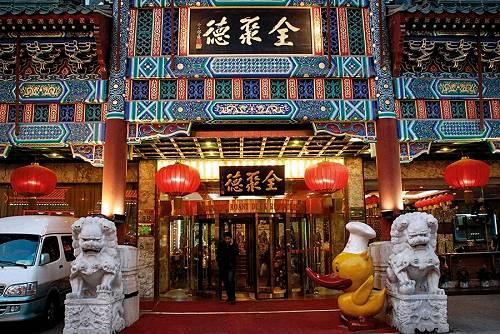
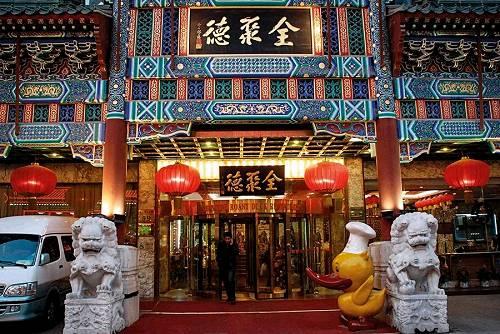
In 1864, the Quanjude restaurant was established in Beijing. Yang Quanren, the founder of Quanjude, developed the hung oven to roast ducks. With its innovations and efficient management, the restaurant became well known in China, introducing the Peking Duck to the rest of the world.

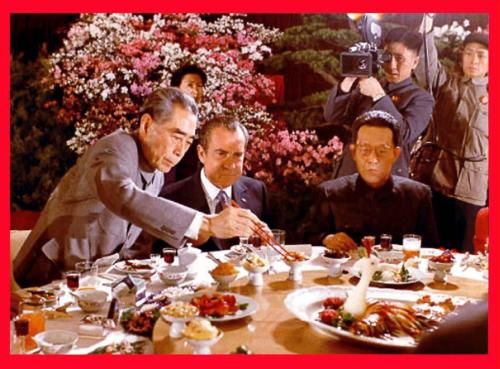
By the mid-20th century, Peking Duck had become a national symbol of China, favored by tourists and diplomats alike. For example, Henry Kissinger, the Secretary of State of the United States, met Premier Zhou Enlai in the Great Hall of the people  on July 10, 1971, during his first (secret) visit to China. After a round of inconclusive talks in the morning, the delegation was served Peking Duck for lunch, which became Kissinger’s favourite. The Americans and Chinese issued a joint statement the following day, inviting President Richard Nixon to visit China in 1972.

✨Typical Restaurants

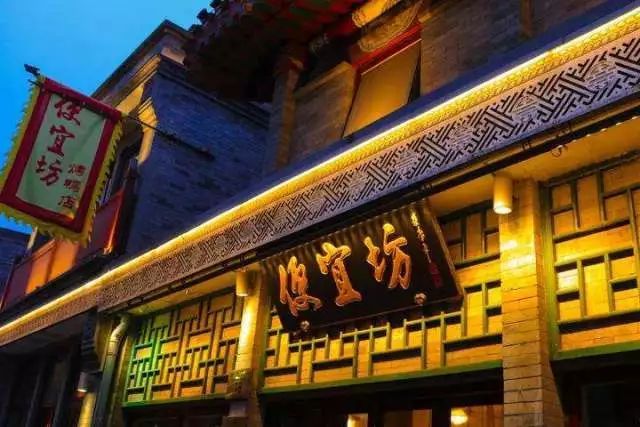
Two notable restaurants in Beijing which serve this dish are Quanjude and Bianyifang, both centuries-old establishments which have become household names, each with their own style: Quanjude is known for using the hung oven roasting method, while Bianyifang uses the oldest technique of closed oven roasting.

✨Serving

The cooked Peking Duck is traditionally carved in front of the diners and served in three stages.

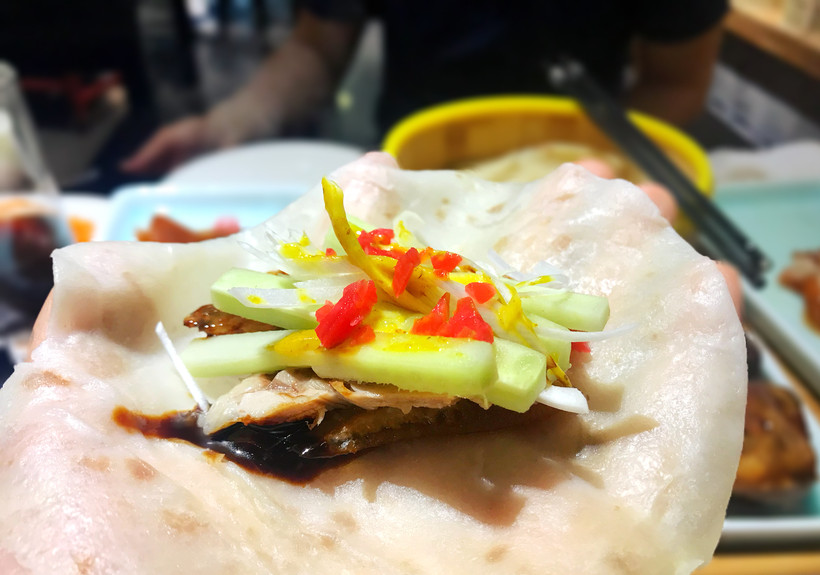
First, the duck skin is served with sugar and garlic sauce as dip. The skin tastes better while remaining warm, but it will cool down fast. The meat is then served with steamed pancakes, spring onions and sweet bean sauce. Several vegetable dishes are provided to accompany the meat, typically cucumber sticks. Some restaurants offer watermelon radish sticks as alternative. The diners spread sauce over the pancake. Traditionally, the pancake is wrapped around the meat and spring onion, then eaten by hand. Cucumber sticks are eaten as refreshment between Peking Duck rolls, but can also be rolled in the pancake.

The remaining duck can be cooked in three ways. The traditional way is to be cooked into a broth. The meat together with bones can also be stir-fried with sweet bean sauce, or rapidly sautéed and served with salt and Sichuan pepper. Otherwise, they are packed up to be taken home by the customers.

✨My favourite restaurant

Jingweizhai

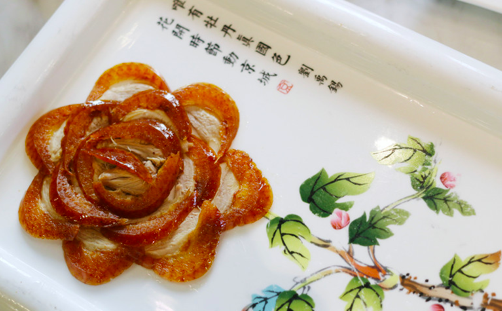
The platter follows the shape of the peony petals, with seven on the outside lap, five on the second lap, three on the third lap. It has one central point, 16 total and means perfection and prosperity.

🏠location

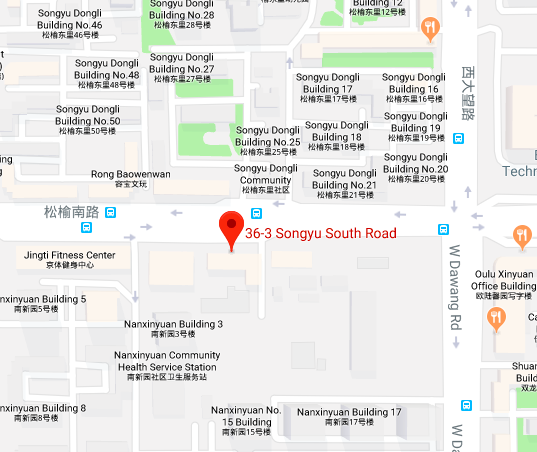
No.36, south songyu road (downstairs of 7-day hotel)
Subway line 14
Walk 690m from exit D of west gate

通过 WordPress.com 设计一个这样的站点
从这里开始